After an extensive period of study, analysis, and collaborative work with the clinical team, at Centre de Psicologia Jaume Primer – Psicòlegs Girona we have developed the following material with the aim of offering a clear, rigorous, and practical overview of the main evidence-based psychotherapeutic interventions.
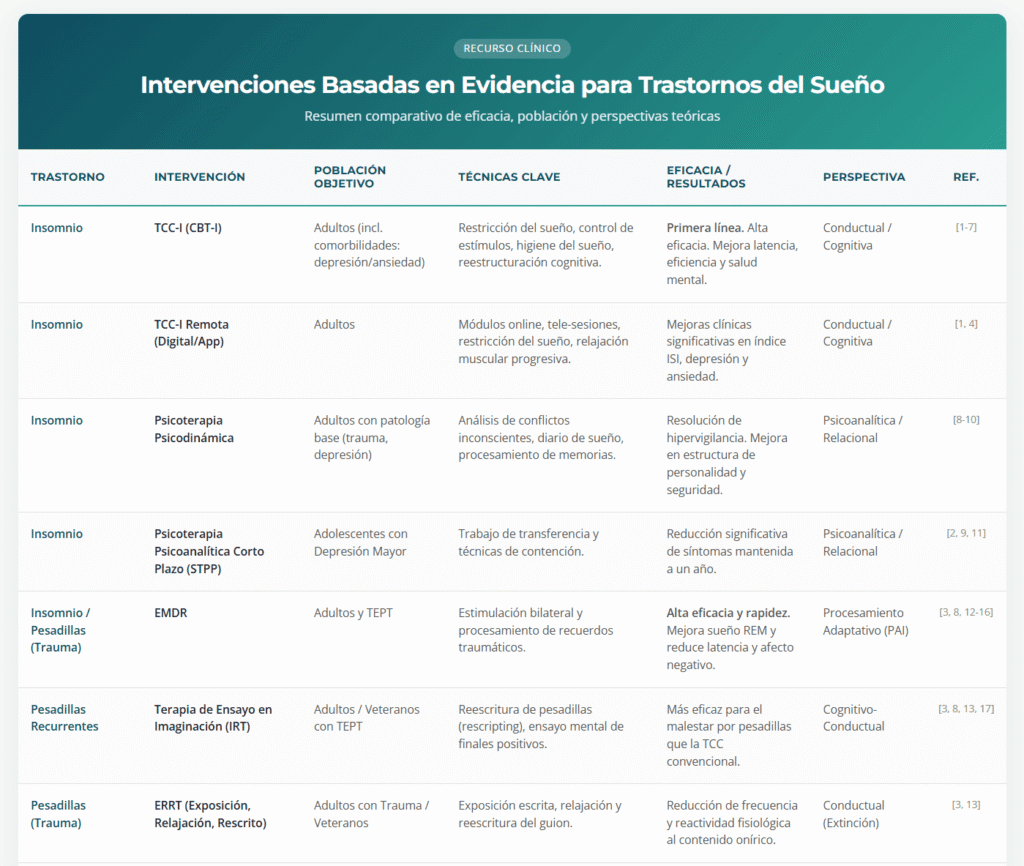
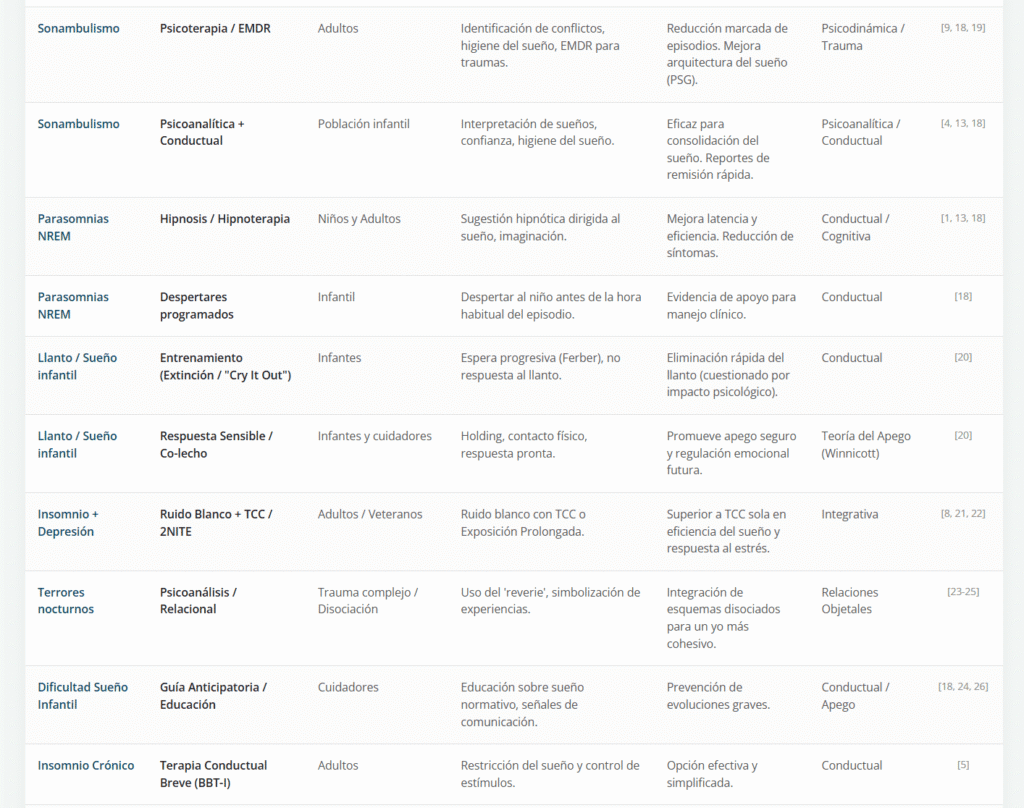
This data table presents a comprehensive and comparative overview of the most relevant interventions for addressing insomnia and related sleep disorders. The summarized information is based on randomized controlled trials (RCTs), meta-analyses, and systematic reviews, evaluating not only symptom reduction but also remission rates, clinically significant improvement, and treatment dropout rates.
The key approaches included in this compilation are:
- Cognitive behavioral therapy for insomnia (CBT-I): Considered the gold standard for insomnia treatment and established as a first-line intervention. Its primary focus is on modifying maladaptive thought patterns and behaviors, incorporating techniques such as sleep restriction, stimulus control, and sleep hygiene. Evidence shows high effectiveness in reducing symptoms and improving sleep latency, efficiency, and overall sleep quality in adults, including those with comorbid conditions such as anxiety or trauma.
- Psychodynamic / Psychoanalytic and short-term Psychodynamic Psychotherapy (STPP): Scientific evidence indicates that it can be highly effective in addressing insomnia associated with unconscious conflicts or underlying psychopathology (such as trauma or anxiety), leading to improvements in hypervigilance and personality structure within weeks. It emphasizes unconscious processes, early relational experiences, and the development of self-awareness, particularly in adults and adolescents experiencing difficulties initiating or maintaining sleep.
- Eye movement desensitization and reprocessing (EMDR): A technique originally developed for treating PTSD that uses bilateral stimulation (eye movements, tapping, or tones) to facilitate the reprocessing of traumatic memories without requiring detailed verbalization of the content. Several studies report particularly high success rates in managing trauma-related insomnia and nightmares, improving REM sleep architecture and reducing sleep latency within 3–8 sessions in adults and patients with PTSD.
- Imagery rehearsal therapy (IRT) and integrated protocols: This compilation also includes specialized approaches such as IRT for recurrent or post-traumatic nightmares, which involves rewriting and mentally rehearsing positive endings to nightmares, with demonstrated effectiveness in reducing frequency and intensity (moderate to large effect sizes). Additionally, integrated protocols such as 2NITE combine CBT-I with prolonged exposure therapy, allowing simultaneous intervention for insomnia and PTSD (or traumatic nightmares), particularly in populations such as veterans, showing superior outcomes in sleep efficiency and stress response.
This compilation facilitates identifying which treatments are most effective for different patient profiles, taking into account moderating factors such as childhood trauma, comorbidity, and individual preferences. Overall, the table constitutes a clinical and training tool of high value, designed to promote understanding of the real-world efficacy and ecological validity of contemporary psychotherapies in both public health settings and private practice.

References:
1. Xu, D., Li, Z., Leitner, U., & Sun, J. (2024). Efficacy of remote cognitive behavioural therapy for insomnia in improving health status of patients with insomnia symptoms: A meta-analysis. Cognitive Therapy and Research, 48(2), 177–211.
2. Schønning, T., Dahl, H.-S. J., Hummelen, B., & Ulberg, R. (2022). Do sleep disturbances improve following psychoanalytic psychotherapy for adolescent depression? International Journal of Environmental Research and Public Health, 19(3), 1790.
3. Dema, A., & Musaj, L. (2023). A systematic review and meta-analysis of psychotherapeutic approaches for recurring nightmares [Preprint]. Qeios.
4. Prather, A. A., Krystal, A. D., Emsley, R., Carl, J., Ball, T., Tarnai, K., Aguilera, A., Espie, C. A., & Henry, A. L. (2025). The effectiveness of digital cognitive behavioral therapy to treat insomnia disorder in US adults: Nationwide decentralized randomized controlled trial. JMIR Mental Health, 12, e84323.
5. Department of Veterans Affairs & Department of Defense. (2025). Behavioral and psychological treatments for insomnia: A provider’s guide. Health.mil.
6. Walker, J., Muench, A., Perlis, M. L., & Vargas, I. (2022). Cognitive behavioral therapy for insomnia (CBT-I): A primer. Klinicheskaia i Spetsial’naia Psikhologiia, 11(2), 123–137.
7. Rossman, J. (2019). Cognitive-behavioral therapy for insomnia: An effective and underutilized treatment for insomnia. American Journal of Lifestyle Medicine, 13(6), 544–547.
8. Chicago Psychoanalytic Institute. (2025). Comparative efficacy of Eye Movement Desensitization and Reprocessing, Cognitive Behavioral Therapy, and Relational Psychoanalytic Psychotherapy in the treatment of sleep disorders: A comprehensive analysis of clinical research in the United States.
9. Chicago Psychoanalytic Institute. (2025). Relational Psychoanalytic Psychotherapy for Sleep Disorders: An Exhaustive Analysis of Clinical Research, Theoretical Mechanisms, and Intersubjective Treatment Processes in the United States.
10. Chicago Psychoanalytic Institute. (2025, 12 de juny). Conquering Insomnia: Powerful Strategies for Restful Sleep.
11. Barbato, G. (2025). The guardian of dreams: The neglected relationship between sleep and psychoanalysis. Brain Sciences, 15(3), 281.
12. Seok, J.-W., & Kim, J. I. (2024). The efficacy of Eye Movement Desensitization and Reprocessing treatment for depression: A meta-analysis and meta-regression of randomized controlled trials. Journal of Clinical Medicine, 13(18), 5633.
13. Nappi, C. M., Drummond, S. P. A., & Hall, J. M. H. (2012). Treating nightmares and insomnia in posttraumatic stress disorder: A review of current evidence. Neuropharmacology, 62(2), 576–585.
14. National Center for PTSD. (2025). Comprehensive Clinical Analysis of Cognitive Behavioral Therapy for Insomnia and Eye Movement Desensitization and Reprocessing in the Treatment of Sleep-Wake Disorders Among U.S. Adult Populations.
15. Start My Wellness. (2025, octubre). EMDR vs. CBT: Which Therapy Works Best for Trauma?.
16. Stickgold, R. (2002). EMDR: A putative neurobiological mechanism of action. Journal of Clinical Psychology, 58(1), 61–75.,
17. Isaac, F., Toukhsati, S. R., DiBenedetto, M., & Kennedy, G. A. (2022). Cognitive behavioral therapy-based treatments for insomnia and nightmares in adults with trauma symptoms: A systematic review. Current Psychology, 1–11.,
18. Conway, S. G., Castro, L., Lopes-Conceição, M. C., Hachul, H., & Tufik, S. (2011). Psychological treatment for sleepwalking: Two case reports. Clinics, 66(3), 517–520.,
19. Conway, S. G., Castro, L., Lopes-Conceição, M. C., Hachul, H., & Tufik, S. (2011). Psychological treatment for sleepwalking: Two case reports. Clinics, 66(3), 517–520. (Disponible en PubMed Central PMCID: PMC3072019).,
20. Zandoná, C. L. (2014). Responding to infant sleep-related crying: A theoretical exploration of caregiver response from attachment and object relations perspectives [Tesis de maestría, Smith College]. Smith ScholarWorks.,
21. Malkomsen, A., Wilberg, T., Bull-Hansen, B., Dammen, T., Evensen, J. H., Hummelen, B., Løvgren, A., Osnes, K., Ulberg, R., & Røssberg, J. I. (2025). Comparative effectiveness of short-term psychodynamic psychotherapy and cognitive behavioral therapy for major depression in psychiatric outpatient clinics: A randomized controlled trial. BMC Psychiatry, 25(1), 113.,
22. Colvonen, P. J., Hunt, C., Park, J., Angkaw, A. C., Gehrman, P., Clare, K., & Norman, S. B. (2025). Cognitive behavioral therapy for insomnia with prolonged exposure compared to sleep hygiene and prolonged exposure: A randomized controlled trial. The Journal of Clinical Psychiatry, 86(3), 24m15584.,
23. Ogden, T. H. (2004). This art of psychoanalysis: Dreaming undreamt dreams and interrupted cries. The International Journal of Psychoanalysis, 85(4), 857–877.,
24. Scalabrini, A., Esposito, R., & Mucci, C. (2021). Dreaming the unrepressed unconscious and beyond: Repression vs dissociation in the oneiric functioning of severe patients. Research in Psychotherapy: Psychopathology, Process and Outcome, 24(2), 111–121.,,
25. Bucci, W. (2009). The sleeping analyst, the waking dreams: Commentary on papers by Richard A. Chefetz and David G. Mark. Psychoanalytic Dialogues, 19(4), 415–425.
26. Scher, A., & Dror, E. (2003). Attachment, caregiving, and sleep: The tie that keeps infants and mothers awake. Sleep and Hypnosis, 5(1), 40–50.,

Psicòloga Col. 26.978 y fundadora del Centre de Psicología Jaume Primer – Psicòlegs Girona.