By Dina Rahwan Khdair, Psychologist Col. 26.978
A Critical Analysis in Light of Unmet Needs in Mental Health and the Pressing/Urgent Need for Therapeutic Innovation
This report presents a critical and contextualized analysis of recent trends (primarily 2021-2023) in the consumption of benzodiazepines (BZD, ATC N05B) and other key psychotropic medications (especially antidepressants, N06A) in Europe and worldwide. Beyond merely presenting quantitative data from organizations such as the European Union Drugs Agency (EUDA) and the Organisation for Economic Co-operation and Development (OECD), this work interprets these trends as symptomatic indicators of deep and persistent unmet needs within mental healthcare systems. Key findings reveal a significant and widespread increase in antidepressant (N06A) consumption in most of the countries analyzed (OECD, 2023a). While this may reflect greater mental health awareness, the analysis suggests it is also a direct consequence of the chronic difficulty in accessing timely psychological care, especially in primary care (Need 1), the predominance of a biomedical model (Need 4) that often prioritizes pharmacology over psychosocial interventions (Illich, 1975), and the intense care pressure (Need 5, 9) that favors rapid pharmacological responses.
In contrast, trends for benzodiazepines (N05B) are more heterogeneous at the aggregated prescription level (DDD), with some countries showing stabilization or slight decreases after specific interventions (Esteves et al., 2023; Monteiro et al., 2022; Perlman et al., 2019). However, this apparent improvement masks a worrying reality: indicators of misuse, dependence, chronicity, and associated harms (evidenced by treatment demand (EMCDDA, 2024c), hospital emergency visits (Lisbon Addictions, 2024), problematic use in vulnerable populations such as the elderly (Tiric, 2024), and presence in the illicit market (EMCDDA, n.d.-a; FRANK, n.d.)) continue to be a critical public health issue. This persistence is directly linked to the structural lack of effective and accessible non-pharmacological therapeutic alternatives for anxiety and insomnia (Need 2), often deficient communication regarding the real risks of long-term use and the lack of solid evidence for it (Need 3), and systemic barriers to implementing adequate deprescribing processes (Need 5, 6). The consumption of multiple substances, notably BZD with opioids or alcohol (EMCDDA, 2024a), drastically exacerbates risks and underscores the failure of systems to offer truly integrated and holistic care (Need 10).
In conclusion, this report argues that trends in psychotropic drug consumption are inseparable from the structural deficiencies of mental health systems. This interdependence highlights the undeniable urgency of developing, validating, and implementing innovative therapeutic solutions that directly address the identified needs. The Centre de Psicologia Jaume Primer – Psicòlegs Girona, with its proposal to democratize access to personalized and quality psychological therapy, presents itself not as a simple tool, but as a fundamental strategic response to the documented challenges. Its potential lies in improving access (Need 1), offering effective alternatives (Need 2, 10), facilitating greater user information and empowerment (Need 3, 8), and contributing to a paradigm shift towards more integrated, personalized care that is less exclusively dependent on pharmacology (Need 4, 7), thus aligning with the real demands of the population and evidence-based recommendations.
I. Introduction
A. Purpose, Scope, and Conceptual Framework: Unmet Needs as a Fundamental Interpretive Key
This report transcends the mere statistical description of trends in the consumption of psychotropic medications (primarily benzodiazepines, antidepressants, anxiolytics, and hypnotics/sedatives) in Europe and worldwide during the recent period (focus on 2021-2023). Its central objective is to perform a critical and contextualized analysis, using as its fundamental interpretive framework a set of ten essential unmet needs in mental healthcare. These needs, identified from professional literature, reports from organizations (e.g., Asociación Española de Neuropsiquiatría [AEN], 2017), clinical guidelines, and the analysis of user demands (e.g., Federació Veus, n.d.; Salut Mental Catalunya & Federació Veus, n.d.), are not isolated elements, but rather structural factors that profoundly condition both clinical practice and user experiences, and which, we argue, are directly reflected in the observed patterns of pharmacological consumption.
The analysis aims to demonstrate that consumption figures, far from being autonomous, are visible symptoms of systemic imbalances and unsatisfied population demands. Understanding this interrelationship is crucial for adequately assessing the magnitude of problems associated with the use (and overuse or misuse) of psychotropic drugs and, fundamentally, for justifying the imperious need and strategic opportunity to develop and implement innovative, accessible, and person-centered therapeutic alternatives, such as those proposed by the Centre de Psicologia Jaume Primer – Psicòlegs Girona.
The ten unmet needs that structure this report are:
- Critical Need for Timely Access to Qualified Psychological Care in Primary Care: Primary care is the first point of contact for most people with common mental health problems. However, the chronic shortage of clinical psychology professionals at this level leads to unacceptable delays (months of waiting), preventing early, brief, and effective interventions that could resolve many cases without resorting to pharmacology or preventing their chronification.
- Urgent Need for Non-Pharmacological Therapeutic Alternatives: There is a growing demand from the population and a solid evidence base (e.g., results from the PsicAP study) supporting the efficacy of psychological interventions for prevalent disorders such as anxiety, mild-to-moderate depression, and insomnia. Despite this, the tendency towards pharmacological prescription as an almost automatic response persists.
- Fundamental Need for Complete, Clear, and Understandable Information on the Risks and Limitations of Psychotropic Drugs (Especially Benzodiazepines): Legislation (e.g., Law 41/2002) mandates adequately informing patients. However, in practice, information regarding the real risks of dependence, tolerance, side effects (cognitive, risk of falls, interactions), and, crucially, the lack of robust evidence for the long-term use of BZDs, is often insufficient, conveyed in technical, hard-to-understand language, or minimized. This infringes upon patient autonomy and hinders genuine shared decision-making.
- Need to Challenge Over-medicalization and the Predominance of the Biomedical Model: The dominant paradigm in mental health remains strongly anchored in the biomedical model (Illich, 1975), which tends to conceptualize psychological suffering primarily as a biochemically treatable imbalance. This fosters over-prescription (Choudhury et al., 2015), can divert resources from psychosocial and community interventions, and often ignores or minimizes the impact of contextual and social factors (Vieira, 2002).
- Imperious Need to Improve Quality of Care Through More Time and Resources per Consultation: Extreme care pressure and limited time per visit in many healthcare systems (especially in primary care) prevent the establishment of a solid therapeutic relationship (Leal Rubio, 2006), carrying out comprehensive assessments, exploring alternatives, agreeing on individualized treatment plans (Tomé, 2014), providing adequate follow-up, or addressing complex processes such as gradual and supported deprescribing. Medication often becomes the most “efficient” solution in terms of time.
- Structural Need for Greater Coordination and Integration between Levels of Care: The fragmentation between primary care and specialized mental health services, long waiting lists for referrals, and the lack of fluid communication and shared protocols hinder continuity of care (Leal Rubio, 2006), generate duplication and inefficiencies, and can leave the patient in a care limbo.
- Essential Need to Recognize and Address the Social Determinants of Mental Suffering: A significant portion of psychological distress (especially Common Mental Disorders) is directly related to adverse living conditions ( precarious employment, poverty, inadequate housing, social isolation, discrimination). Medicalizing this suffering without addressing its structural causes is an incomplete intervention that can contribute to chronification and mask social problems (Valls-Llobet & Loio, 2014).
- Ethical and Therapeutic Need to Empower Users and Foster Shared Decision-Making: Paternalistic models where the professional decides unilaterally must be overcome (Allué, 2013). Users demand (Federació Veus, n.d.; Fireweed Collective, n.d.; Salut Mental Catalunya & Federació Veus, n.d.) to be active participants in their therapeutic process, to receive all necessary information in an accessible way (Need 3), and for their preferences to be considered.
- Need to Care for Professionals: Improve Working Conditions and Support: The shortage of professionals, chronic workload, lack of supervision and support, and excessive bureaucratization contribute to professional burnout. These precarious working conditions not only affect the well-being of professionals but also negatively impact the quality of care and can incentivize defensive or simplifying practices, such as over-prescription.
- Need (and Strategic Opportunity) to Develop, Promote, and Fund Psychosocial and Community Interventions: There is a wide range of psychosocial, group, and community interventions that have demonstrated effectiveness and offer a more holistic, less stigmatizing approach, oriented towards recovery and integral well-being (Salut Mental Catalunya & Federació Veus, n.d.). Decisive investment is needed in their implementation and accessibility as real alternatives or necessary complements to medication.
Key Operational Definitions:
- Psychotropic Medications: Drugs that act on the central nervous system and modify mental state, mood, perception, or behavior.
- Benzodiazepines (BZD): A specific class of psychotropic drugs, primarily with ATC codes N05B (Anxiolytics) and N05C (Hypnotics and Sedatives), commonly used for anxiety, insomnia, seizures, and muscle relaxation (EMCDDA, n.d.-a).
- Anxiolytics: Drugs used to treat anxiety (frequently N05B) (e.g., Esteves et al., 2023; Ferreira et al., 2020; FPS Health Belgium, 2023; Monteiro et al., 2022; OECD, 2023a; Rocha et al., 2022).
- Antidepressants: Drugs used to treat depression and other conditions (ATC code N06A) (e.g., Esteves et al., 2023; FPS Health Belgium, 2023; Monteiro et al., 2022; OECD, 2023a).
- Hypnotics/Sedatives: Drugs used to induce sleep or calm (frequently N05C) (e.g., Esteves et al., 2023; Ferreira et al., 2020; FPS Health Belgium, 2023; Monteiro et al., 2022; OECD, 2023a). Includes the so-called “Z-drugs” (zopiclone, zolpidem).
- Defined Daily Dose (DDD): An WHO-standardized metric representing the assumed average maintenance dose per day for a drug used for its main indication in adults. It is usually expressed as DDD per 1000 inhabitants per day (DID) to compare consumption across populations (e.g., OECD, 2023a; OECD Health Data Definitions, n.d.; WHO, cited in OECD, 2023a). It is a unit of consumption measurement, not necessarily of optimal individual clinical dose.
B. Data Sources and Methodological Limitations
The quantitative analysis relies primarily on:
- Data from International Organizations: EUDA (e.g., EMCDDA, 2024a, 2024c; EUDA, n.d.-b, n.d.-c), OECD (e.g., OECD, 2023a, 2023b; OECD Health Statistics, n.d.; WHO & OECD, 2023), Eurostat (2024), and WHO reports (cited in WHO & OECD, 2023). These sources provide comparable data on consumption (DDD/DID), indicators of problematic use (treatment demand, emergency visits), and healthcare context.
- Academic Publications and National Reports: Specific studies analyzing trends in particular countries (e.g., Ferreira et al., 2020; Monteiro et al., 2022; Park, 2024; Perlman et al., 2019; Rocha et al., 2022; Simões et al., 2022; Tibério et al., 2024; Tiric, 2024) or on particular topics (polypharmacy, use in specific populations).
The qualitative and contextual interpretation is based on:
- Clinical Practice Guidelines and Professional Consensuses: Documents that establish evidence-based recommendations.
- Reports and Publications from User and Professional Associations: Documents that compile experiences, demands, and perspectives from the ground up (e.g., AEN, 2017; Federació Veus, n.d.; Fireweed Collective, n.d.; Salut Mental Catalunya & Federació Veus, n.d.).
- Literature on the Sociology of Health and Medicalization: Works that analyze the social and cultural dimensions of psychotropic drug consumption (e.g., Choudhury et al., 2015; Illich, 1975; Vieira, 2002).
Key Limitations:
- Time Lag: Official aggregated and validated data typically have a delay of 1-2 years (e.g., EMCDDA, 2024a). The most recent data available in reports from 2024/early 2025 primarily reflect consumption from 2021-2023.
- Methodological Heterogeneity: Data collection methods vary across countries and indicators (surveys vs. registries, outpatient vs. hospital, reimbursed vs. total medications) (e.g., EMCDDA, 2024a; OECD, 2023a). Comparability is not always perfect.
- Limitations of the DDD Metric: As previously mentioned, DDD measures consumption volume, not therapeutic adequacy, duration, nor actual individual or population risk (OECD, 2023a). It does not distinguish between appropriate, inappropriate, or problematic use.
- Invisibility of Non-Prescribed/Illicit Use: Prescription/sales data do not capture consumption outside the formal healthcare system, which can be significant for some substances like BZDs. Indirect indicators (surveys, wastewater, emergency visits) attempt to address this, but with their own limitations.
- Difficulty in Isolating Causality: Establishing direct causal relationships between unmet needs and consumption trends is complex, as multiple factors are involved. Nevertheless, the consistency of correlations and the underlying logic provide a solid basis for the proposed interpretation.
II. Benzodiazepines (BZD): The Persistence of a Multifactorial Problem Rooted in Systemic Deficiencies
Benzodiazepines (primarily coded under ATC N05B as anxiolytics and N05C as hypnotics/sedatives) constitute a paradigmatic example of how pharmacological consumption trends are intrinsically linked to the unmet needs of the mental health system. The analysis of BZDs reveals a complex history that goes beyond prescription figures.
A. Prescribed Consumption Trends (DDD/DID): A Deceptively Variable Surface
The analysis of aggregated consumption data, measured in Defined Daily Doses per 1000 inhabitants per day (DDD/DID), presents a heterogeneous picture across Europe and other OECD countries:
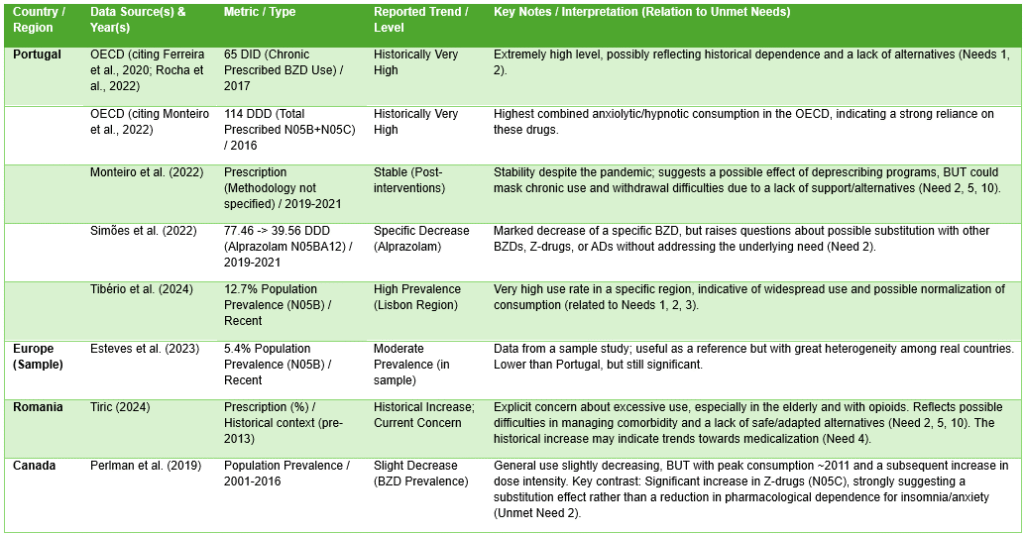
- Alts Consumidors Històrics: Països com Portugal (Ferreira et al., 2020; Monteiro et al., 2022; Rocha et al., 2022) i Espanya han mostrat històricament algunes de les taxes de consum de BZD (i/o ansiolítics N05B i hipnòtics N05C combinats) més elevades del seu entorn. Per exemple, Portugal reportava 65 DID per a ús crònic de BZD el 2017 (Ferreira et al., 2020) i xifres combinades de N05B+N05C superiors a 114 DDD el 2016 (Monteiro et al., 2022), molt per sobre de la mitjana europea.
- Signs of Stabilization or Decline in Some Areas: More recent studies in countries with previously high consumption, such as Portugal, suggest a possible stabilization or even a certain decrease in prescription rates (Esteves et al., 2023; Monteiro et al., 2022). A specific study on Alprazolam in Portugal also showed a decrease between 2019-2021 (Simões et al., 2022). In Canada, a longitudinal study (2001-2016) found a slight decrease in the prevalence of BZD use, although dose intensity increased (Perlman et al., 2019).
- Persistent Concerns Elsewhere: In contrast, there are reports pointing to ongoing or emerging problems in other regions, such as Romania, with concerns about excessive use, especially in combination with opioids in the elderly (Tiric, 2024).
Critical Interpretation in Light of Unmet Needs:
This heterogeneity and potential declines should not be interpreted as a resolution of the underlying problem. Rather, they reflect the complex interaction of various factors related to systemic deficiencies:
- Impact of Specific Interventions vs. Structural Change: The declines observed in places like Portugal may be the result of public health programs focused on BZD deprescribing (Esteves et al., 2023; Monteiro et al., 2022). This demonstrates that interventions are possible, but does not necessarily indicate a fundamental shift in the root causes that led to the initial high consumption. Without addressing the structural lack of accessible therapeutic alternatives (Need 2) or care pressure (Need 5), these gains may be fragile or limited. The COVID-19 pandemic, for example, may have partially counteracted these efforts.
- Chronification as an Invisible Barrier: The stabilization of figures may mask a large cohort of patients chronically using BZDs, for whom withdrawal is extremely difficult due to developed physical and psychological dependence, and due to the lack of specialized support and resources for gradual and accompanied deprescribing (Need 5, 6, 10). Guidelines recommend short-term use (weeks, not months/years) (EMCDDA, n.d.-a; Monteiro et al., 2022; Perlman et al., 2019), but clinical reality often diverges dramatically.
- BZDs as the Default “Solution” in the Face of Lack of Alternatives: In a context of limited or non-existent timely access to psychological therapies (Need 1), BZDs continue to be a tempting tool for primary care physicians who need to offer some immediate response to patient suffering (anxiety, insomnia), despite the long-term risks. Need 2 (lack of non-pharmacological alternatives) is likely one of the most powerful drivers of initial prescription and subsequent chronification.
- Deficient Information Perpetuating Use: If patients are not adequately informed about the risks of dependence and the lack of long-term efficacy at the time of initial prescription (Need 3), they are less likely to question continued use or actively seek alternatives. Therapeutic inertia sets in more easily.
- Possible Substitution Effect: It is necessary to investigate whether the decrease in classic BZD consumption is not being offset by an increase in the use of other substances with similar or different risk profiles, such as Z-drugs (zopiclone, zolpidem – N05CF), which showed a significant increase in Canada (Perlman et al., 2019), or even by the use of sedating antidepressants or low-dose antipsychotics for anxiety or insomnia (off-label use; Rodrigues et al., 2023; Tuncel, 2021). This substitution would not resolve the fundamental need for non-pharmacological approaches (Need 2, 10).
In summary, BZD prescription trends are complex, but the analysis suggests that underlying problems related to healthcare system deficiencies remain profound, even in places where aggregated figures may show some improvement.
B. Indicators of Non-Medical Use, Misuse, and Associated Harms: Persistent Evidence of Serious Problems
Beyond prescription data (DDD), which only capture part of the phenomenon, various indicators consistently point to the persistence of significant problems related to misuse, dependence, and associated harms from BZDs. These indicators are crucial because they reflect the real negative consequences of this consumption and are directly connected to unmet needs:
- Demand for Treatment (EUDA TDI Indicator): The fact that people specifically seek treatment for problems arising from BZD consumption (often as a secondary drug, but also primary) is irrefutable proof of the existence of dependence and problematic use (EMCDDA, 2024a, 2024c; EUDA, n.d.-b, n.d.-c). This often reflects an initial prescription that may have been justified but not adequately monitored or withdrawn in time, aggravated by the lack of information on risks (Need 3) and the difficulty in accessing effective detoxification programs and psychological support (Need 2, 10).
- Drug-Related Hospital Emergencies (EUDA Euro-DEN Plus Network): BZDs regularly feature among the substances involved in emergency room presentations for acute intoxication, often in combination with other drugs (especially alcohol or opioids, see Section IV) (EMCDDA, 2024a; EUDA, n.d.-b, n.d.-c; Lisbon Addictions, 2024). An increase or persistence of these emergencies is a direct indicator of acute harms and suggests an increase in risky use or misuse. This can be related to a lack of awareness about dangerous interactions (Need 3) or to risky consumption patterns in a context of a lack of vital or therapeutic alternatives (Need 1, 2, 7). Data from neighboring EU countries also show BZDs among the top five drugs in emergency situations (Lisbon Addictions, 2024).
- Non-Prescribed Use and Illicit Market (“Street Benzos”): The EUDA (EMCDDA, n.d.-a) and other sources (FRANK, n.d.) warn about the existence of an illicit BZD market, which includes drugs diverted from the legal market, counterfeits, and synthetic analogues (often very potent). Self-reported non-prescribed BZD use, which the 2024 European Web Survey on Drugs (EWSD) is expected to help quantify (EMCDDA, n.d.-a; EUDA, n.d.-b), suggests that people resort to these avenues for various reasons: difficulty obtaining prescriptions (perhaps due to prior dependence or detected misuse), self-medication for symptoms not addressed by the system (Need 1, 2), potentiation of other drug effects, or managing withdrawal from other substances. This reality underscores a failure of the formal system for a portion of the population and increases risks due to uncertainty about the composition and dosage of illicit products.
- Drug Analysis Data (Drug Checking – EUDA TEDI Network): Substance analysis services occasionally detect BZDs in samples presented as other drugs or as counterfeit medications, warning of unexpected risks to consumers (EMCDDA, 2024a; EUDA, n.d.-b).
- Wastewater Analysis Data (EUDA SCORE Network): This technique allows for estimating the total population consumption (prescribed and non-prescribed) of BZDs and their metabolites, offering a complementary view to sales or survey data, although it cannot distinguish the source or legitimacy of consumption (e.g., EMCDDA, 2024a; EUDA, n.d.-b; Novak et al., 2014; OECD Score Network, n.d.).
- Presence in High-Risk Contexts: The EUDA (EMCDDA, n.d.-a) indicates that BZDs are among the most prevalent substances detected in drivers (increasing the risk of accidents) and are commonly used by problematic opioid users (to enhance euphoria or manage withdrawal) or psychostimulant users (to mitigate unpleasant effects or facilitate sleep). This use in high-risk contexts demonstrates the integration of BZDs into highly dangerous polysubstance use patterns (See Section IV).
Collectively, these indicators paint a picture where, despite possible fluctuations in DDDs, problematic use, dependence, and harms associated with BZDs remain a persistent and concerning reality. This persistence is inextricably linked to the structural deficiencies of the system: the insufficiency of effective and accessible therapeutic alternatives (Need 2, 10), deficient information about risks (Need 3), difficulties in adequate follow-up and deprescribing (Need 5, 6), and the tendency to medicalize distress without addressing underlying causes (Need 4, 7).
C. Specific Populations at Risk: The Paradigmatic Vulnerability of the Elderly
The use of BZDs in the elderly population warrants special attention, as it starkly illustrates how the system’s unmet needs translate into risky practices for a particularly vulnerable group. Various studies and reports indicate:
- High Prevalence of Use: Studies in Portugal (Esteves et al., 2023; Simões et al., 2022; Tibério et al., 2024) and concerns expressed in other contexts (Tiric, 2024) indicate significantly higher BZD use rates in older age groups compared to the general population. Often, this use is chronic, extending over years.
- Frequent Co-prescription with Opioids: It is common for the elderly to be prescribed BZDs together with opioids for the simultaneous management of conditions such as chronic pain, anxiety, and/or depression (Tiric, 2024). This combination is particularly dangerous due to the heightened risk of respiratory depression, excessive sedation, falls, and cognitive impairment.
- Higher Risk of Adverse Effects: The elderly are physiologically more sensitive to the effects of BZDs (EMCDDA, n.d.-a) and have a higher risk of experiencing serious negative consequences, including:
- Falls and Fractures: The sedative and muscle-relaxant effect significantly increases the risk of falls (contextualized by Törő et al., 2016), with consequent fractures (especially hip fractures) and loss of autonomy.
- Cognitive Impairment: Chronic BZD use has been associated with an increased risk of memory problems, attention deficits, and executive function impairment, and possibly with an increased risk of dementia (Monteiro et al., 2022; Verdoux et al., 2002).
- Dependence and Withdrawal: They develop dependence and can experience severe withdrawal symptoms if medication is suddenly stopped.
- Excessive Daytime Sedation: Impacting quality of life, social interaction, and the ability to perform daily activities.
- Increased Risk of Overdose: Especially when combined with other CNS depressants such as opioids or alcohol.
Critical Interpretation of this Situation:
The high use of BZDs in the elderly, despite documented risks and explicit clinical guideline recommendations against prolonged use (EMCDDA, n.d.-a; Monteiro et al., 2022; Perlman et al., 2019; Tiric, 2024; Verdoux et al., 2002), is a direct reflection of multiple systemic failures:
- Lack of Adapted Therapeutic Alternatives (Need 2, 10): There is a shortage of accessible non-pharmacological options specifically designed to address anxiety, insomnia, or emotional distress in the elderly, taking into account their possible physical, cognitive, or social limitations. Adapted psychological therapy, gentle physical activity programs, social interventions to combat loneliness, etc., are often not available or integrated into routine care.
- Difficulty in Managing Clinical Complexity Under Pressure (Need 5): The elderly often present with multiple comorbidities and polypharmacy. In short consultations and under pressure, it can be “simpler” for the professional to maintain or add a BZD than to initiate a complex multidisciplinary approach or a deprescribing process that requires time, follow-up, and coordination (Need 6).
- Therapeutic Inertia and Possible Ageism: Once a prescription is initiated, there may be resistance to withdrawing it due to fear of decompensation or withdrawal symptoms, or simply due to inertia. There may also be an underlying ageist attitude that normalizes certain levels of sedation or cognitive impairment in the elderly, or underestimates their capacity to benefit from other therapies.
- Medicalization of Social or Existential Problems (Need 4, 7): Anxiety or insomnia in the elderly can be related to factors such as loneliness, grief, fear of dependence, or loss of social role. BZDs may offer temporary symptomatic relief, but they do not address these underlying causes, contributing to a medicalization of the aging process and existential suffering.
- Deficient Information and Participation (Need 3, 8): It is possible that information about risks and benefits is not communicated clearly and adapted to the cognitive or sensory capacities of the elderly person, or that they are not actively involved in decision-making regarding their treatment.
The case of the elderly is, therefore, a powerful argument for the urgent need to rethink mental health care in this life stage, promoting safe and effective alternatives (Need 2, 10), facilitating supported deprescribing, improving professional training, and adopting a more holistic and less medicalized approach (Need 4, 7).
Table 1: Benzodiazepine (BZD) Consumption in Selected Countries and its Interpretation in Light of Unmet Needs
Explanatory Notes:
- DDD: Defined Daily Dose. An WHO-standardized metric for comparing consumption across populations.
- DID: DDD per 1000 inhabitants per day (DDD per Inhabitant per Day). Allows for comparison of consumption rates.
- Prevalence: Percentage of the population reporting consumption of the substance within a specific period (according to the study).
- N05B: ATC code for Anxiolytics (mostly BZDs).
- N05C: ATC code for Hypnotics and Sedatives (includes some BZDs and Z-drugs).
- N05BA12: Specific ATC code for Alprazolam.
- Interpretation (Relationship with Needs): This column attempts to connect the observed data with the 10 unmet needs previously discussed in the report, offering a deeper layer of analysis.
- Limitations: Remember that these data represent a complex snapshot. DDDs do not reflect appropriate vs. inappropriate use. Prevalence depends on survey methodology. Trends can vary within each country.
III. General Trends in the Consumption of Other Psychotropic Medications: The Shadow of Medicalization and the Search for Alternatives
While benzodiazepines present a complex panorama, other classes of psychotropic drugs show different but equally revealing trends when analyzed from the perspective of unmet mental health needs.
A. Antidepressants (N06A): An Exponential Increase that Raises Profound Questions
The clearest and most consistent trend observed internationally over the last two decades is the spectacular and widespread increase in the consumption of antidepressants (AD), mainly those classified under the ATC code N06A. The OECD data are compelling:
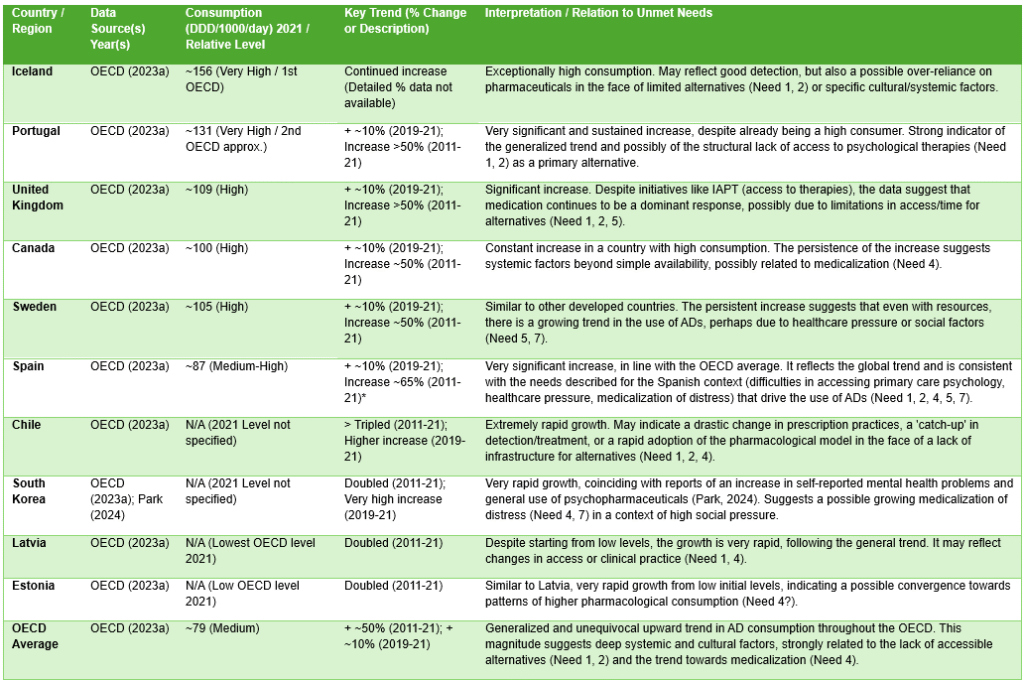
- Sustained Growth: The average consumption of antidepressants in OECD countries nearly doubled between 2000 and 2011 and continued to increase by almost an additional 50% between 2011 and 2021 (OECD, 2023a).
- Recent Accelerated Increases: Even in the most recent period (2019-2021), partially coinciding with the COVID-19 pandemic, an additional average increase of 10% was observed (OECD, 2023a).
- Global Trend: This upward trend is observed in the vast majority of analyzed countries, albeit with varying magnitudes. Countries such as Iceland (highest consumption in 2021), Portugal, the United Kingdom, Canada, and Sweden show very high consumption rates (exceeding 100 DDD/DID) (OECD, 2023a). Others, such as Chile, South Korea, Latvia, and Estonia, despite starting from lower levels, have experienced particularly pronounced increases (doubling or tripling consumption within a decade) (OECD, 2023a). Portugal, for example, also confirms this upward trend in national studies (Esteves et al., 2023; Monteiro et al., 2022).
Critical Interpretation in Light of Unmet Needs:
While the increase in antidepressant consumption may reflect positive aspects such as greater detection and diagnosis of depression and anxiety, a reduction in the stigma associated with seeking help, and the availability of drugs with side effect profiles perceived as more favorable (such as SSRIs), a critical analysis suggests that this exponential growth is deeply influenced by the unmet needs of the system:
- Antidepressants as the Predominant Response to Lack of Psychological Access (Need 1): In a system where access to psychological therapy in primary care is slow and difficult, antidepressants often become the first, and sometimes only, therapeutic option offered for mild to moderate depression and even for anxiety disorders, despite guidelines frequently recommending psychotherapy as the first-line treatment or in combination. The relative speed of prescribing compared to the wait for therapy plays a crucial role.
- Expansion of Indications and Medicalization of Existential Distress (Needs 4, 7): There is debate about whether the increase in antidepressant consumption reflects only improved detection of clinical disorders or also a “diagnostic expansion” and a tendency to medicalize forms of suffering previously considered normal reactions to life’s challenges (grief, work stress, relational problems, socioeconomic difficulties) (Choudhury et al., 2015; Illich, 1975). Antidepressants may be used to manage distress stemming from adverse social determinants (Need 7), offering symptomatic relief without addressing underlying causes. The dominant biomedical model (Need 4) facilitates this approach.
- Long-Term Prescription as an Implicit Norm: Although the long-term efficacy and necessity of indefinite maintenance are debated issues, clinical practice often leans toward prolonged or indefinite treatments, contributing to the cumulative increase in consumption. The difficulty of discontinuing antidepressants (withdrawal effects) and the lack of adequate follow-up to reassess the need (Need 5) may perpetuate this trend.
- Influence of the Pharmaceutical Industry and Promotion: Although more regulated than in the past, the direct or indirect promotion of new antidepressants and the emphasis on biological explanations of depression may have historically contributed to their widespread acceptance and prescription.
- Lack of Community and Social Support Alternatives (Need 10): The weakness of community support networks and the lack of accessible psychosocial interventions can leave individuals more isolated and reliant on individual solutions like medication to cope with their distress.
In conclusion, the massive increase in antidepressant consumption, despite its multifaceted nature, is a powerful indicator of how the structural limitations of the system (especially the lack of access to psychological therapy and psychosocial alternatives) and the tendency toward the medicalization of suffering shape the predominant therapeutic responses. This raises serious questions about the sustainability of this model and the urgent need to rebalance the therapeutic offer toward more diverse and integrated options (Needs 1, 2, 4, 7, 10).
Table 2: Widespread Increase in Antidepressant Consumption (N06A) in the OECD: An Indicator of Possible Pharmacological Responses to Unmet Needs
Explanatory Notes:
- DDD/1000/day: Defined Daily Dose (DDD) per 1000 inhabitants per day. It is the standard WHO metric used here to compare consumption volume between countries.
- Relative Level: Qualitative classification of consumption (Very High, High, Medium, Low) based on the country’s approximate position within the OECD data for 2021.
- N/A (Consumption 2021): Indicates that the exact DDD/1000/day value for 2021 was not specified in the main summary of the source (OECD, 2023a) for this country, although the trend or percentage change was highlighted.
- Main Source: All data comes from the OECD’s Health at a Glance report (2023a), unless another source is explicitly indicated for additional information (e.g., Park, 2024 for the context of South Korea).
- (*): Indicates that the DDD/1000/day values for 2021 are estimates based on data from immediately preceding years and/or the percentage trends reported in the main source (OECD, 2023a).
- (*): Regarding Spain: the percentage change 2011-2021 (~+65%) has been estimated from the complete OECD.Stat database, complementing the summarized report.
B. Hypnotics and Sedatives (N05C): Mixed Trends and Possible Substitution
The N05C class includes both some benzodiazepines with a primary hypnotic indication and the so-called “Z-drugs” (zopiclone, zolpidem, zaleplon – N05CF). Trends here appear less uniform than for antidepressants:
- Variability Between Countries: While Portugal, historically a high consumer of the N05B+N05C combination (Monteiro et al., 2022), showed a specific downward trend for N05C in one study (Esteves et al., 2023), other data suggest a different picture.
- Increase in Z-Drugs?: The Canadian study (Perlman et al., 2019) is particularly revealing, as it showed a statistically significant increase in all measures (consumption, prevalence, etc.) for Z-drugs (mainly zopiclone) between 2001 and 2016, in contrast to the stable/declining trend of classic BZD.
Critical Interpretation:
These trends suggest several factors at play:
- Possible Substitution of BZD with Z-Drugs: Z-drugs were introduced as alternatives to BZD for insomnia, with the initial (later questioned) perception of having lower potential for abuse and dependence. The increase in their consumption (Perlman et al., 2019) could reflect a partial substitution of classic BZD, driven by this perception or by prescription preferences. However, the risks associated with Z-drugs (dependence, cognitive side effects, anterograde amnesia, abnormal sleep behaviors) are also significant.
- The Persistence of the Need for Insomnia Interventions (Need 2): Regardless of whether BZD or Z-drugs are prescribed, the demand for pharmacological treatment for insomnia remains high. This underscores, once again, the lack of widespread access to evidence-based non-pharmacological therapies for insomnia, such as Cognitive Behavioral Therapy for Insomnia (CBT-I), which is considered the first-line treatment.
- Changes in Guidelines and Risk Perceptions: The evolution of clinical guidelines and increased awareness of the risks of BZD may have shifted prescribing toward Z-drugs, without necessarily addressing the issue of insomnia medicalization (Need 4) or the lack of alternatives (Need 2).
C. Other Psychotropics (Stimulants, Antipsychotics): Specific Trends and Emerging Concerns
- Stimulants (N06B): There is concern regarding the use of stimulants (such as methylphenidate) to enhance academic performance (“study drugs”), particularly among university students (Novak et al., 2014). Prevalence estimates vary widely. Wastewater analysis is used to monitor this use (Novak et al., 2014). In South Korea, increasing prescriptions of stimulants for young people are reported in the context of rising mental health issues (Park, 2024). This phenomenon may reflect extreme social and academic pressures and raises questions about the medicalization of performance (Needs 4, 7).
- Antipsychotics (N05A): Although this report does not focus on this class, its long-term use in South Korea is noted (Park, 2024). A more detailed analysis would be needed to assess trends in antipsychotic consumption (Inchauspe Aróstegui & Valverde Eizaguirre, 2017), including their increasing off-label use for conditions such as insomnia, anxiety, or behavioral disorders (Rodrigues et al., 2023; Tuncel, 2021), which could also be related to the lack of specific therapeutic alternatives or challenges in managing complex cases (Needs 2, 5, 10).
- Other Substances: The South Korean report (Park, 2024) also mentions a concerning increase in the use of Propofol (an anesthetic with abuse potential, N01AX10) and other controlled substances, reflecting possible broader issues of misuse of psychoactive medications.
Partial Conclusion of Section III:
Trends within the broader category of psychotropics are not monolithic. The marked increase in antidepressants contrasts with the more mixed trends of hypnotics/sedatives and the complexity of BZD. This underscores the importance of analyzing each pharmacological class separately, but always interpreting trends through the lens of the fundamental unmet needs of the mental health system. The widespread increase in AD, in particular, suggests a systemic imbalance that favors pharmacological solutions over psychological and social alternatives, pointing directly to the critical need to expand access to these alternatives (Needs 1, 2, 10) and to rethink the predominant care model (Needs 4, 7).
IV. Consumption of Multiple Substances: The Dangerous Synergy Between Psychotropic Drugs, Illicit Drugs, and Systemic Shortcomings
One of the most concerning and complex aspects of the current landscape of psychoactive substance consumption is the growing prevalence of multiple substance use (also known as polydrug use), defined by the EUDA as the simultaneous or sequential use of two or more psychoactive substances (EMCDDA, 2024a). This phenomenon frequently involves the combination of psychotropic medications (especially benzodiazepines) with other prescribed drugs, alcohol, and/or illicit drugs. Analyzing this trend is crucial, as it not only exponentially increases health risks but also starkly reveals the interconnections between medical use, misuse, and unmet needs.
A. Key Findings from the EUDA and Other Organizations
The 2024 European Drug Report (EDR 2024) from the EUDA (EMCDDA, 2024a) and other relevant sources consistently highlight the importance and dangers of multiple substance use:
- Common and Concerning Phenomenon: Polydrug use is identified as a common pattern among people who use drugs in Europe, not as an exception (EMCDDA, 2024a).
- Specific High-Risk Combinations: Special emphasis is placed on the dangerousness of certain combinations, notably
- Benzodiazepines + Opioids: Considered one of the most lethal combinations due to the high risk of respiratory depression (EMCDDA, n.d.-a; EMCDDA, 2024a; Perlman et al., 2019; Tiric, 2024).
- Alcohol + Other Depressants (incl. BZD): The combination of multiple central nervous system (CNS) depressants enhances sedation, psychomotor impairment, and the risk of overdose (EMCDDA, n.d.-a; FRANK, n.d.; Rodrigues et al., 2023).
- Stimulants (e.g., Cocaine) + Alcohol: A common combination that produces toxic metabolites (cocaethylene) and increases cardiovascular risk and impulsive behaviors (EMCDDA, 2024a).
- New Psychoactive Substances (NPS) in Combination: The use of NPS alongside “classic” drugs or medications increases the unpredictability of effects and risks.
- Greater Health Risks: Multiple substance use is associated with a significantly higher risk of:
- Fatal Overdose: The majority of overdose deaths in Europe involve the presence of multiple substances, with opioids being the most common, but often in combination with BZD, alcohol, or other drugs (EMCDDA, 2024a).
- Non-Fatal Intoxications and Medical Emergencies: Increases the likelihood of experiencing severe adverse effects requiring urgent medical attention (EUDA, n.d.-b; Lisbon Addictions, 2024).
- Chronic Physical and Mental Health Problems: Greater associated burden of morbidity (liver issues, cardiovascular problems, infections, comorbid mental disorders).
- Complex Dependence: Dependence on multiple substances is more difficult to treat.
- Complications for Interventions: Polydrug use complicates diagnosis, treatment (e.g., the response to naloxone in opioid overdoses may be less effective if BZD are involved), and prevention (EMCDDA, 2024a).
- Involuntary Consumption (Adulteration): An additional risk arises from the involuntary consumption of multiple substances when drugs acquired on the illicit market are adulterated or mixed without the consumer’s knowledge (e.g., fentanyl or potent BZDs in heroin or cocaine samples) (EMCDDA, 2024a).
B. Connections between Poly-drug Use and Unmet Needs
The phenomenon of multiple substance use cannot be understood as a mere act of individual irresponsibility. It is often deeply rooted in the same unmet needs that drive problematic use of individual substances:
- Self-medication of Unaddressed Symptoms (Need 1, 2): Individuals with undiagnosed or inadequately treated anxiety disorders, depression, insomnia, or ADHD by the formal system may resort to combining substances (e.g., alcohol or cannabis with illicitly obtained BZDs) in a desperate attempt to alleviate their suffering when they find no accessible or effective alternatives.
- Management of Side Effects or Withdrawal from Other Substances: The use of BZDs to “come down” from the effects of stimulants (FRANK, n.d.; Rodrigues et al., 2023) or to mitigate opioid withdrawal (EMCDDA, n.d.-a) is a common pattern. This partly reflects the lack of integrated and accessible treatment programs (Need 10) that address dependency holistically and provide support for safely managing side effects and withdrawal.
- Lack of Information on Interaction Risks (Need 3): Part of poly-drug use may stem from ignorance of the serious risks involved in combining certain substances, especially prescription medications with alcohol or other drugs. Clearer and more accessible information about these interactions from healthcare professionals and in public health campaigns is crucial.
- Problematic Co-prescription in a Fragmented System (Need 6): The lack of coordination between different doctors or levels of care can lead to situations where a patient receives prescriptions from multiple professionals (e.g., opioids for pain from a specialist and BZDs for anxiety from a primary care physician) without proper assessment of the combined risk. This is particularly relevant in vulnerable populations such as the elderly (Tiric, 2024).
- Poly-substance use as a symptom of social distress and lack of opportunities (Need 7): In certain contexts, the consumption of multiple substances may manifest as a sign of hopelessness, social exclusion, trauma, or absence of viable life alternatives. Addressing these social determinants is essential for effective prevention and treatment, moving beyond a purely pharmacological or individual-focused approach (Need 4).
- Difficulty in Providing Comprehensive Therapeutic Care (Need 10): Treating dependence on multiple substances requires specialized, multidisciplinary, and often long-term programs that integrate pharmacological, psychological, and social interventions. The availability and accessibility of these integrated programs are frequently insufficient.
C. Implications for Risk Assessment and Prevention
- Insufficiency of Standard Metrics: Metrics such as the DDD (Defined Daily Dose) for an individual substance (e.g., BZDs) are entirely inadequate for assessing real public health risk. Moderate BZD consumption according to DDD may become extremely dangerous when combined with alcohol or opioids. Indicators capable of capturing patterns of combined substance use are urgently needed.
- Need for Integrated Preventive Approaches: Prevention and harm reduction strategies must explicitly address the risks of polydrug use, providing clear information about dangerous interactions and promoting safer alternatives.
- Importance of Low-Threshold and Harm Reduction Services: Services such as drug checking, needle exchange programs, and supervised consumption sites can play a crucial role in detecting dangerous drug combinations and providing information and support to high-risk populations.
- Cruciality of Integrated Care: It is essential to move toward a truly integrated care model (Need 6, 10) that simultaneously addresses mental health issues and addictions (dual diagnosis), taking into account the individual’s social context (Need 7) and promoting their active participation (Need 8).
In summary, the use of multiple substances involving psychoactive drugs is a complex phenomenon that amplifies the inherent risks of each individual substance and, at the same time, reflects—and is exacerbated by—deep shortcomings in the care system. Addressing this challenge requires moving beyond interventions focused on a single substance and adopting comprehensive, coordinated, and person-centered approaches grounded in individuals’ real needs.
V. Summaries of Key Reports and Studies: Evidence Converging on the Need for Change
This section synthesizes the key contributions of major reports from international organizations and relevant academic studies cited throughout the analysis, highlighting how their findings converge in identifying concerning consumption trends and, either implicitly or explicitly, the unmet needs within the mental health care system.
A. European Drug Report (EDR) 2024 and Related Materials (EUDA/EMCDDA)
- Sources: (EMCDDA, 2024a, 2024c; EUDA, n.d.-a, n.d.-b, n.d.-c; Lisbon Addictions, 2024)
- Main Focus: Overview of the situation and trends regarding illicit drugs in Europe (data up to end of 2023, primarily national data from 2022).
- Key Findings Relevant to Psychotropic Substances:
- Critical Emphasis on Polydrug Use: Identifies the use of multiple substances as a central challenge, highlighting dangerous combinations that often involve prescription medications such as benzodiazepines (BZDs) alongside opioids, alcohol, or stimulants (EMCDDA, 2024a). This underscores the permeability between medical use, misuse, and illicit markets, and underscores the need for integrated approaches (Need 10).
- Benzodiazepines in High-Risk Contexts: Highlights the use of BZDs among individuals with problematic use of other drugs (EMCDDA, n.d.-a), their detection in drivers, and their frequent involvement—often in combination with other substances—in overdose fatalities (EMCDDA, 2024a). This underscores the tangible harms associated with their misuse and points to potential systemic failures in providing adequate alternatives or appropriate treatment (Need 2, 10).
- Illicit Market and Emerging Threats: Warns of the circulation of “street benzos,” counterfeit pills, and the potential presence of benzodiazepines or potent synthetic opioids as adulterants (EMCDDA, n.d.-a; EMCDDA, 2024a; FRANK, n.d.), increasing risks for uninformed users (related to Need 3).
- Key Indicators of Misuse: Refers to the Statistical Bulletin for quantitative data on Treatment Demand (TDI) related to benzodiazepines (EMCDDA, 2024c) and Hospital Emergency Presentations (Euro-DEN Plus) (Lisbon Addictions, 2024)—both direct measures of problematic use and associated harms. These indicators reflect the consequences of insufficient alternatives, lack of information, and inadequate support (Needs 2, 3, 5, 10).
- New Monitoring Tools: Highlights the importance of emerging methodologies such as web-based surveys (EWSD) (EMCDDA, n.d.-a; EUDA, n.d.-b)—which include benzodiazepines and can capture non-prescribed use—and wastewater analysis (SCORE) (e.g., EMCDDA, 2024a; EUDA, n.d.-b; Novak et al., 2014; OECD Score Network, n.d.) to obtain a more comprehensive picture of substance use patterns.
B. Health at a Glance 2023 and OECD Health Statistics
- Sources: (Monteiro et al., 2022; OECD, 2023a, 2023b; OECD Health Statistics, n.d.; Rocha et al., 2022; WHO & OECD, 2023)
- Main Focus: Comparative statistics on health and healthcare systems across OECD member countries.
- Key Findings Relevant to Psychotropic Substances:
- Strong Evidence of Massive Increase in Antidepressant Use (N06A): Provides the most robust comparative data (DDD/DID) documenting the exponential rise in antidepressant consumption over the past two decades across virtually all OECD member countries (OECD, 2023a). As previously discussed, this trend raises serious concerns about potential over-medicalization (Need 4) and lack of access to psychological alternatives (Needs 1, 2).
- Data on Anxiolytics (N05B) and Hypnotics/Sedatives (N05C): Includes comparative data for these drug classes (e.g., Ferreira et al., 2020; FPS Health Belgium, 2023; Monteiro et al., 2022; OECD, 2023a), which have helped identify countries with historically high consumption levels (e.g., Portugal, Spain). Analysis of these data, alongside national studies, suggests more heterogeneous trends compared to antidepressants, but confirms the significant scale of use of these potentially dependence-forming medications—linked to the lack of alternatives for managing anxiety/insomnia (Need 2) and challenges in clinical management (Need 5).
- Healthcare System Context: OECD data also provide information on healthcare resources, pharmaceutical expenditure (Shega & Patel, 2024), and other indicators that help contextualize psychotropic consumption trends within the specific characteristics of each national healthcare system.
C. Academic Studies and Specific National Reports
- Sources: (e.g., Choudhury et al., 2015; Esteves et al., 2023; Ferreira et al., 2020; Hoffman et al., 2024; Monteiro et al., 2022; Novak et al., 2014; Park, 2024; Perlman et al., 2019; Rocha et al., 2022; Rodrigues et al., 2023; Simões et al., 2022; Tibério et al., 2024; Tiric, 2024; Tuncel, 2021; Verdoux et al., 2002) (Representative selection)
- Main Focus: Detailed analyses of trends in specific countries or regions, use among particular populations, or specific aspects of consumption.
- Key Relevant Findings:
- Portuguese Studies: (Esteves et al., 2023; Ferreira et al., 2020; Monteiro et al., 2022; Rocha et al., 2022; Simões et al., 2022; Tibério et al., 2024) Document Portugal’s historically high benzodiazepine (BZD) consumption, recent policy efforts to reduce it (with partial success or stabilization), the impact of the pandemic, and the persistently high prevalence—particularly among older adults. These studies confirm the complexity of the issue and the influence of healthcare policies, yet also highlight the persistence of use despite known risks, pointing to unresolved needs (Need 2, 3, 5). They also show a parallel rise in antidepressant (AD) use (Esteves et al., 2023; Monteiro et al., 2022).
- Canadian Study: (Perlman et al., 2019) Reveals a divergence between benzodiazepines (stable or declining) and Z-drugs (increasing), suggesting a potential substitution effect and the persistent demand for pharmacological treatment of insomnia—likely due to lack of access to non-pharmacological alternatives such as CBT-I (Need 2). The study also highlights an increase in benzodiazepine dosage intensity and co-prescription with opioids.
- Reports on Use in Specific Populations: (Older Adults (Tiric, 2024), Students (Novak et al., 2014)) Highlight particular risks in certain groups. The article on Romania (Tiric, 2024) emphasizes excessive benzodiazepine use (often combined with opioids) among older adults, linking it to the management of comorbidities within a context of potential gaps in care (Need 2, 5, 10). The study on students (Novak et al., 2014) points to performance pressure and medicalization as key drivers (Need 4, 7).
- Studies on Polydrug Use and Risks: (EMCDDA, n.d.-a; FRANK, n.d.; Rodrigues et al., 2023; Tiric, 2024) Confirm the dangers of combining benzodiazepines with other depressants (opioids, alcohol) and their use to manage the effects of stimulants, underscoring the need for integrated and harm reduction approaches (Need 10).
- Studies on Medicalization and Social Determinants: (Choudhury et al., 2015; Park, 2024; Valls-Llobet & Loio, 2014; Vieira, 2002) Examine how social, cultural, and economic factors influence psychiatric diagnosis and treatment, and how medication can become a means of managing social distress or adapting to environmental pressures (Need 4, 7). The report on Korea (Park, 2024) serves as a recent example of this dynamic.
- Studies on Perceptions and Experiences: (Allué, 2013; Federació Veus, n.d.; Fireweed Collective, n.d.; Leal Rubio, 2006, 2009; Salut Mental Catalunya & Federació Veus, n.d.; Tomé, 2014) Provide the crucial perspective of users and professionals, highlighting the importance of the therapeutic relationship, access to information, shared decision-making (Need 8), and the challenges posed by coercion (AEN, 2017) or institutional practices (Need 5).
D. Clinical Guidelines and Consensus Documents (e.g., AEN)
- Sources: (AEN, 2017; Inchauspe Aróstegui & Valverde Eizaguirre, 2017)
- Main Focus: To establish evidence-based recommendations for clinical practice and address ethical and rights-related issues.
- Key Relevant Findings:
- Restrictive Recommendations for BZDs: Consistently, clinical guidelines advocate for short-term use of benzodiazepines, warning of risks such as dependence, tolerance, and adverse effects with prolonged use. This clear scientific stance contrasts sharply with real-world clinical practice, revealing a significant gap likely caused by systemic pressures and shortcomings (Need 1, 2, 5).
- Emphasis on Non-Pharmacological Alternatives: Promote psychological interventions (such as CBT) as first-line treatment for many anxiety disorders, depression, or insomnia, acknowledging their efficacy and lower long-term risk (reinforcing Need 2, 10).
- Importance of Information and Shared Decision-Making: Emphasize the ethical and legal obligation to adequately inform patients about treatment options, risks, and benefits, and to promote their active participation in decision-making (Need 3, 8).
- Critique of Coercion and Promotion of Autonomy: Documents such as those from AEN (2017) critically address coercive practices in mental health care and advocate for respect for user autonomy and rights.
Partial Conclusion of Section V:
The review of key reports and studies reveals a striking convergence of evidence. Quantitative data from EUDA and the OECD document alarming trends: a massive increase in antidepressant use, high and problematic benzodiazepine consumption, and widespread polydrug use. National and academic studies confirm these patterns at the local level, explore their causes and consequences among specific populations, and increasingly analyze the role of social and systemic factors. Clinical guidelines and consensus documents clearly define best practices—restricted use of BZDs, prioritization of non-pharmacological alternatives, informed consent, and patient autonomy—yet their effective implementation collides with the reality of overwhelmed, fragmented systems lacking sufficient resources to meet the fundamental needs analyzed here. This gap between evidence, recommendations, and real-world practice is precisely where the urgent need for innovation and systemic change becomes undeniable.
VI. Synthesis, Conclusion, and Strategic Implications: The Imperative Need for Therapeutic Innovation
A. Overall Synthesis: Consumption Trends as an Unmistakable Reflection of Unmet Needs
The critical analysis conducted throughout this report goes beyond a mere description of psychotropic medication consumption trends in Europe and globally.
By interpreting quantitative data through the conceptual framework of the ten fundamental unmet needs in mental health, an unequivocal conclusion emerges: the observed consumption patterns are, to a large extent, visible symptoms and direct consequences of deep-rooted, persistent structural shortcomings within healthcare systems.
-
The exponential and widespread increase in antidepressant (N06A) consumption (OECD, 2023a), while potentially reflecting some positive aspects such as improved detection, appears to be strongly driven by the chronic difficulty in accessing timely psychological or non-pharmacological therapeutic alternatives (Need 1, 2); by the prevalence of a biomedical model that tends to medicalize distress (Need 4) (Illich, 1975)—including distress rooted in social conditions (Need 7) (Valls-Llobet & Loio, 2014); and by systemic care pressures that favor rapid pharmacological responses (Need 5).
-
Regarding benzodiazepines (N05B/N05C), despite more heterogeneous prescribing trends (DDD) (Esteves et al., 2023; Monteiro et al., 2022; Perlman et al., 2019), indicators of misuse, dependence, and associated harms remain alarming (EMCDDA, n.d.-a; EMCDDA, 2024c; EUDA, n.d.-b; FRANK, n.d.; Lisbon Addictions, 2024; Tiric, 2024). This persistence is intrinsically linked to the lack of effective and accessible alternatives for anxiety and insomnia (Need 2); insufficient information on long-term risks (Need 3); inherent difficulties in deprescribing within an overstretched system (Need 5, 9); and their problematic use among vulnerable populations (older adults) (Monteiro et al., 2022; Tiric, 2024; Verdoux et al., 2002) and within polydrug use patterns (EMCDDA, 2024a).
-
The phenomenon of polydrug use (EMCDDA, 2024a), often involving psychotropic medications, amplifies risks and reflects a systemic failure to provide coordinated care (Need 6) (Leal Rubio, 2006) and truly integrated, holistic approaches (Need 10) that consider the individual as a whole and within their broader social and personal context.
Overall, the analysis reveals a troubling gap between evidence-based recommendations—which advocate for psychotherapy as first-line treatment for many disorders, restricted use of benzodiazepines, informed consent, and patient participation—and the reality of daily clinical practice, which is constrained by structural limitations and unmet needs. This discrepancy not only generates high healthcare and societal costs but, above all, results in preventable suffering for millions of individuals.
B. Fundamental Conclusion: The Urgency of a Paradigm Shift and the Need for Innovation
The core conclusion of this report is that effectively addressing the challenges associated with psychotropic medication use requires moving beyond mere adjustments to prescribing guidelines. A paradigm shift in mental health care is urgently needed—one that centers on:
-
Prioritizing and ensuring equitable, timely access to evidence-based psychological and psychosocial interventions (Addressing Needs 1, 2, 10).
-
Actively promoting the de-medicalization of common distress and addressing the social determinants of mental health (Addressing Needs 4, 7).
-
Fostering a culture of shared decision-making, grounded in clear, comprehensive, and understandable information (Addressing Needs 3, 8).
-
Investing in human resources and improving working conditions for professionals to enable high-quality, personalized, and continuous care (Addressing Needs 5, 9).
-
Developing truly integrated and coordinated care systems across levels and disciplines (Addressing Need 6).
This paradigm shift will not occur spontaneously. It requires strong political will, reallocation of resources, and—fundamentally—the consolidation and visibility of care models that are already overcoming some of today’s systemic barriers.
C. Centre de Psicologia Jaume Primer – Psicòlegs Girona: A Real and Evidence-Based Response to the Documented Challenges
It is within this context of urgent need for change that the value proposition of Centre de Psicologia Jaume Primer – Psicòlegs Girona acquires fundamental strategic relevance. By offering direct, human-centered access to high-quality, personalized, and effective psychological therapy, our center does not position itself as an isolated resource, but rather as a model that directly addresses several of the critical unmet needs identified in this report:
-
Directly Addressing Lack of Access (Need 1): The Centre reduces barriers to accessing psychological care by offering a viable alternative to the long waiting lists in the public system, with the flexibility of both in-person and online sessions, enabling earlier intervention.
-
Provision of Effective Non-Pharmacological Alternatives (Need 2, 10): We offer an evidence-based therapeutic option (cognitive-constructivist therapy, CBT) as an alternative or complement to medication, aligning with clinical guidelines and the preferences of many patients.
-
Enhancing Information and Patient Empowerment (Need 3, 8): Through our free informational call and transparent process, we encourage users to better understand their situation and actively participate in their recovery, making informed decisions about their care.
-
Contributing to De-medicalization and a Holistic Approach (Need 4, 7): By facilitating access to psychological therapy in Girona, our center helps counter the trend toward over-medicalization, offering tools to address distress from a broader, non-pharmacological perspective.
-
Support for Professionals and High-Quality Care (Need 5, 9): As a private center, we ensure a work environment that allows our psychologists to provide personalized, continuous care—free from the overload often experienced in the public system—resulting in higher-quality support for clients.
-
Coordination and Continuity (Need 6): We promote fluid communication and, with the patient’s consent, can coordinate with other professionals (primary care physicians, psychiatrists) to ensure comprehensive, integrated care.
Within our consultation rooms, you will find a genuine space of care that directly addresses the needs identified in this report: we offer access to therapy without long waiting times, provide proven alternatives to medication, empower our clients with information and practical tools, and work from a holistic approach that counters the trend toward over-medicalization.
Therefore, Centre de Psicologia Jaume Primer is not merely a service provider; it is a practical example of a care model aligned with scientific evidence and the real needs of the population. Its consolidation and growth represent an opportunity to positively contribute to the necessary paradigm shift in mental health care in Girona.
D. Limitations of the Analysis and Future Perspectives
It is reiterated that official comprehensive data suffer from a time lag; complete consumption figures for 2024–2025 will only become available in consolidated reports at a later date. The full impact of the COVID-19 pandemic and its long-term consequences on mental health and psychotropic medication use is still being assessed. Future results from surveys such as the EWSD 2024 (EUDA, n.d.-b) and the ongoing analysis of multiple indicators will be essential to monitor the evolution of this complex situation.
It is crucial that future research continues to explore the interrelationship between consumption trends, clinical practices, health policies, and social determinants—as well as rigorously evaluating the effectiveness and real-world impact of care models like the one offered by Centre de Psicologia Jaume Primer on improving mental health outcomes.
In summary, this report concludes that current trends in psychotropic medication use reflect an underlying crisis in mental health care, characterized by fundamental unmet needs. The solution does not lie solely in pharmacological management, but in the bold and determined implementation of accessible, person-centered therapeutic alternatives. The Centre de Psicologia Jaume Primer – Psicòlegs Girona emerges as a key player and a model to follow in this necessary transformation.
VII. Bibliography
Allué, M. (2013). El paciente inquieto. Edicions Bellaterra.
Asociación Española de Neuropsiquiatría (AEN). (2017). Coerción y salud mental. Revisando las prácticas de coerción en la atención a las personas que utilizan los servicios de salud mental (Cuadernos técnicos 20). AEN.
Australian Drug Foundation (ADF). (n.d.). Benzodiazepines. Retrieved July 26, 2024, from https://adf.org.au/drug-facts/benzodiazepines/
Choudhury, S., McKinney, K. A., & Kirmayer, L. J. (2015). “Learning how to deal with feelings differently”: Psychotropic medications as vehicles of socialization in adolescence. Social Science & Medicine, 143, 311–319. https://doi.org/10.1016/j.socscimed.2015.08.021
Comitè de Bioètica de Catalunya. (2018). Respecte a les decisions anticipades de la persona amb un trastorn mental. Generalitat de Catalunya.
https://canalsalut.gencat.cat/web/.content/_Professionals/bioetica/documents/arxiu/doc_vol_anticip_salut_mental_cat.pdf
Esteves, S., Domingues, H., Martins, S., Jones, H. E., Duarte, J., & Ornelas, J. (2023). The use of psychotropic medication in a representative sample of the adult population in Europe: A scoping review. European Journal of Public Health, 33(1), 93–101. https://doi.org/10.1093/eurpub/ckac171
European Monitoring Centre for Drugs and Drug Addiction (EMCDDA). (n.d.-a). Benzodiazepines drug profile. European Union Drugs Agency (EUDA). Retrieved July 26, 2024, from https://www.euda.europa.eu/publications/drug-profiles/benzodiazepines_en
European Monitoring Centre for Drugs and Drug Addiction (EMCDDA). (2024a). European Drug Report 2024: Trends and Developments. Publications Office of the European Union. https://www.euda.europa.eu/publications/european-drug-report/2024_en
European Monitoring Centre for Drugs and Drug Addiction (EMCDDA). (2024c). Statistical Bulletin 2024: Treatment demand indicator (TDI) – Benzodiazepines as primary drug. European Union Drugs Agency (EUDA). Retrieved July 26, 2024, from https://www.euda.europa.eu/data/stats2024/tdi_en
European Union Drugs Agency (EUDA). (n.d.-b). European Web Survey on Drugs (EWSD). Retrieved July 26, 2024, from https://www.euda.europa.eu/activities/european-web-survey-drugs_en
European Union Drugs Agency (EUDA). (n.d.-c). Statistical Bulletin 2024. Retrieved July 26, 2024, from de https://www.euda.europa.eu/data/stats2024_en
Eurostat. (2024, juliol). Mental health and related issues statistics. Statistics Explained. Retrieved July 26, 2024, from https://ec.europa.eu/eurostat/statistics-explained/index.php/Mental_health_and_related_issues_statistics
Federació Veus. (n.d.). Guia de drets. Retrieved July 26, 2024, from https://veus.cat/es/derechos/
Ferreira, P., Machado-Alves, M., & Santana, R. (2020). Use of benzodiazepines in Portugal and other European countries. Acta Médica Portuguesa, 33(11), 759–769. https://doi.org/10.20344/amp.13694
Ferreira, T. G. R. (2023). Consumo de Ansiolíticos e Hipnóticos na Ars-Lvt: Caracterização e Fatores Associados [Tesi de màster no publicada]. Universidade Nova de Lisboa. https://run.unl.pt/handle/10362/154470
Fireweed Collective (anteriorment The Icarus Project). (n.d.). Guides and resources. Retrieved July 26, 2024, from https://fireweedcollective.org/resources/
FPS Health Belgium. (2023, March 22). Consumption trends of medicines in Belgium and Europe [Diapositives de presentació]. FPS Health, Food Chain Safety and Environment. https://www.health.belgium.be/sites/default/files/uploads/fields/fpshealth_theme_file/22_03_2023_-_philip_haywood.pdf
FRANK. (n.d.). Benzodiazepines. Retrieved July 26, 2024, from https://www.talktofrank.com/drug/benzodiazepines
Hoffman, R. S., Alipour, A., Ordak, M., Lee, J. Y., Garlich, F. M., Torabi, R., Okoli, G. N., Akhondzadeh, S., Ghaleiha, A., Keshavarzi, A., Sadeghi, M., Motavalian, A., Akhondzadeh, M., Brand, M., & Brand, S. (2024). Cultural dimensions and anxiolytic drug consumption: Insights from Hofstede’s 6-D model and correlation analysis in 32 European countries. Psychiatria Danubina, 36(1), 58–67. https://hrcak.srce.hr/file/398588
Illich, I. (1975). Medical nemesis: The expropriation of health. Pantheon Books.
Inchauspe Aróstegui, J. A., & Valverde Eizaguirre, M. A. (2017). El uso de antipsicóticos en la psicosis (Cuadernos técnicos AEN 18). Asociación Española de Neuropsiquiatría.
Leal Rubio, J. (2006). La relación en los cuidados y el trabajo en red en salud mental. En J. Leal Rubio & A. Escudero Nafs (Coords.), La continuidad de cuidados y el trabajo en red en salud mental (pp. 27–60). Asociación Española de Neuropsiquiatría – Estudios.
Leal Rubio, J. (2009). La supervisión en el trabajo con pacientes graves: Instituciones, equipos y profesionales. Asociación Española de Neuropsiquiatría.
Ley 41/2002, de 14 de noviembre, básica reguladora de la autonomía del paciente y de derechos y obligaciones en materia de información y documentación clínica. Boletín Oficial del Estado, 274, de 15 de noviembre de 2002, 40126-40132. https://www.boe.es/eli/es/l/2002/11/14/41
Lisbon Addictions. (2024). Data collection on acute drug toxicity using the Euro-DEN Plus model in countries bordering the EU [Resum de presentació en conferència]. Lisbon Addictions 2024 Conference, Lisboa, Portugal. https://www.lisbonaddictions.eu/lisbon-addictions-2024/presentations/data-collection-acute-drug-toxicity-using-euro-den-plus-model-countries-bordering
Lochbrunner, S. (2016). Verordnungsentwicklung ausgewählter psychotroper Arzneistoffe: Eine Analyse auf Basis von GKV-Routinedaten der Jahre 2000 bis 2011 [Tesi doctoral, Ludwig-Maximilians-Universität München]. LMU edoc Server. https://edoc.ub.uni-muenchen.de/19663/
Monteiro, A. F., Gonçalves, J., & Alves da Costa, F. (2022). Consumption trends of antidepressants, anxiolytics, sedatives, and hypnotics in a European country (2000-2020). International Journal of Environmental Research and Public Health, 19(4), 2298. https://doi.org/10.3390/ijerph19042298
Novak, C., Hearn, L., Koomar, S., Pemberton, T., & Solis, J. M. (2014). Psychostimulant use among college students during periods of high and low stress: An interdisciplinary approach utilizing both self-report and unobtrusive chemical sample data. Addictive Behaviors, 39(5), 919–925. https://doi.org/10.1016/j.addbeh.2014.02.014
Organisation for Economic Co-operation and Development (OECD). (n.d.-a). OECD Data Explorer. Retrieved July 26, 2024, from https://data-explorer.oecd.org/
Organisation for Economic Co-operation and Development (OECD). (n.d.-b). OECD Health Statistics [Base de dades]. Retrieved July 26, 2024, from https://www.oecd.org/en/data/datasets/oecd-health-statistics.html
Organisation for Economic Co-operation and Development (OECD). (n.d.-c). OECD Health Data 2024 Questionnaire – Definitions. Retrieved July 26, 2024, from https://www.oecd.org/els/health-systems/OECD-Health-Data-2024-Questionnaire-DEFINITIONS.pdf
Organisation for Economic Co-operation and Development (OECD). (n.d.-d). OECD Project on wastewater analysis to track illicit drug use. Retrieved July 26, 2024, from https://www.oecd.org/chemicalsafety/risk-management/oecd-project-on-wastewater-treatment.htm
Organisation for Economic Co-operation and Development (OECD). (2023a). Health at a Glance: Europe 2022 – State of Health in the EU Cycle. OECD Publishing. https://doi.org/10.1787/c95a3077-en
Organisation for Economic Co-operation and Development (OECD). (2023b). Health at a Glance 2023: OECD Indicators. OECD Publishing. https://doi.org/10.1787/7a7afb35-en
Park, J. Y. (2024, April 1). Behind the smiles: Mental health in South Korea’s high-pressure society. Mad in America. https://www.madinamerica.com/2024/04/behind-the-smiles-mental-health-in-south-koreas-high-pressure-society/
Perlman, C. M., McMartin, K., & Seitz, D. (2019). Novel measures of benzodiazepine and Z-drug utilisation trends in a Canadian provincial adult population, 2001–2016. BMJ Open, 9(1), e024018. https://doi.org/10.1136/bmjopen-2018-024018
Rocha, V., Jesus, C., Pinto, R., Coelho, L., Soares, S., & Lapão, L. V. (2022). Trends and geographic variabilities in benzodiazepines prescription in primary care to older adults: A 3-year population-based ecological study in Portugal. Nursing Reports, 12(3), 615–625. https://doi.org/10.3390/nursrep12030067
Rodrigues, B. S., Correia, M., & Souza, L. (2023). Off-label use of psychotropic drugs by physicians in Brazil: An analysis of the prevalence of the practice based on medical prescription data between 2018 and 2022. PLOS ONE, 18(11), e0294680. https://doi.org/10.1371/journal.pone.0294680
Salut Mental Catalunya & Federació Veus. (n.d.). Manual per a la recuperació i autogestió del benestar. Activa’t per la Salut Mental . Activa’t per la Salut Mental. http://www.activament.org/wp-content/uploads/2018/11/Ma-nual-per-a-la-Recuperaci%C3%B3-i-lAutogesti%C3%B3-del-Benes-tar.pdf
Shega, A., & Patel, N. (2024). Forecasting pharmaceutical expenditure in Europe: A systematic review. PLoS ONE, 19(4), e0299757. https://doi.org/10.1371/journal.pone.0299757
Simões, P., Augusto, M., Santos, C., Pedro, A. B., Santos, P., & Mendes, Z. (2022). Prescribing patterns of alprazolam in Portugal: A nationwide drug utilization study (2019–2021). Pharmacy, 10(4), 92. https://doi.org/10.3390/pharmacy10040092
Tibério, M. P. S., Costa, S., Cavaco, A., & Znanstveni Članki, I. (2024). Consumption of benzodiazepines and z-drugs in the lisbon and tagus valley region, portugal: A retrospective observational study based on electronic medical records. Zdravstveno Varstvo, 63(3), 171–180. https://doi.org/10.2478/sjph-2024-0021
Tiric, G. (2024). Excessive use of benzodiazepines among the elderly population: A major public health problem. Journal of Research in Innovative Social Sciences, 1(1), 1–7. https://jriss.4ader.ro/wp-content/uploads/2024/04/first-page.pdf
Törő, K., Marin, L., Győrffy, S., & Keller, É. (2016). The circumstances and characteristics of fatal falls in Victoria, Australia: A descriptive study. Romanian Journal of Legal Medicine, 24(2), 100–104. https://doi.org/10.4323/rjlm.2016.100
Tuncel, O. (2021, March). Demand Effects of Off-Label Drug Prescribing [Document de treball]. Terry College of Business, University of Georgia. https://bfi.uchicago.edu/wp-content/uploads/Tuncel_off_label.pdf
Valls-Llobet, C., & Loio, N. (2014). ¿Todas locas….o un gran negocio? Mujeres y Salud, 36, 22–24.
Verdoux, H., Lagnaoui, R., & Begaud, B. (2002). Long-term benzodiazepine use and cognitive decline in the elderly: The Epidemiology of Vascular Aging Study. Dementia and Geriatric Cognitive Disorders, 13(3), 163–169. https://doi.org/10.1159/000048655
Vieira, M. (2002). A medicalização do corpo feminino. Editora FIOCRUZ.
World Health Organization (WHO) Regional Office for Europe & Organisation for Economic Co-operation and Development (OECD). (2023). Health at a Glance: Europe 2022 – State of Health in the EU Cycle. WHO. https://iris.who.int/handle/10665/376116
© 2025 Centre de Psicologia Jaume Primer – Psicòlegs Girona.
Written by Dina Rahwan Khdair . All rights reserved. Reproduction of this content in whole or in part without express permission is prohibited.

Psychologist, License No. 26.978, and founder of Centre de Psicologia Jaume Primer.